Imports too declined 26 per cent to $29.47 billion in August, leaving a trade deficit of $6.77 billion.
Imports too declined by 16.31 per cent to $37.39 billion.

Sectors with positive growth during the month include rice, iron ore, oil seeds, oil meals, meat, dairy and poultry products, pharmaceuticals, coffee, engineering goods, and plastic.
The country's exports dipped 8.74 per cent to $23.52 billion in November on account of contraction in shipments of key sectors like petroleum, engineering, chemicals and gems and jewellery, official data showed on Tuesday. Trade deficit during the month narrowed to $9.87 billion as imports too declined by 13.32 per cent to $33.39 billion.
Imports increased by 4.5 per cent, the highest growth in the last six months as crude oil and gold shipments shot up in the month.

The country's exports grew 5.37 per cent year-on-year to $27.24 billion in January 2021, mainly driven by healthy growth in pharma and engineering sectors, according to provisional data of the commerce ministry. Trade deficit during the month narrowed to $14.75 billion from $15.3 billion in January 2020. It was $15.44 billion in December 2020. Imports in January 2021 rose 2 per cent to $42 billion.
Import segments which recorded negative growth include gold, silver, transport equipment, coal, fertiliser, machinery and machine tools. However, exports of oil seeds, coffee, rice, tobacco, spices, pharma, and chemicals reported positive growth in June.

Out of 30 key export sectors, as many as 22 showed negative growth in September.
Imports too tumbled by 58.65 per cent to $17.12 billion in April from $41.4 billion in the same month last year, according to the data by the commerce and industry ministry.
Barring rice, spices, iron ore and pharmaceuticals, all the remaining 26 key sectors registered negative growth in May. Imports too plunged 51 per cent to $22.2 billion in May.
India needs to make use of this opportunity to significantly enhance its exports especially in information and communications technology and the automotive sector.

India and Australia would now implement the free trade agreement on a mutually agreed date as the Australian Parliament on Tuesday approved the pact between the two countries. "BREAKING: Our Free Trade Agreement with India has passed through parliament," Australian Prime Minister Anthony Albanese said in a tweet. The India-Australia Economic Cooperation and Trade Agreement (AI-ECTA) needed ratification by the Australian parliament before its implementation.
Economists polled in a recent survey by Ficci unanimously felt that the rupee will continue to be under pressure in 2018-19

'I found it unbelievable that L&T said 45,000 jobs were waiting to be filled because of unavailability of suitable skillsets.' 'So, when the Opposition sweepingly says there are no jobs, I'm sorry... I'm not saying it's raining jobs, but there are jobs. The (skill) gap has to be bridged.'
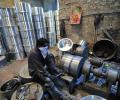
With the Covid-19 pandemic showing signs of ebbing and economic activity picking up, factory owners in Jalandhar had hoped that the worst was over. However, the heat wave in April and extensive power cuts that came with it, have crushed their hopes. The city's large number of micro, medium and small enterprises (MSMEs) are now gearing up for yet another struggle, this time to survive with the shortage of power that is severely impacting their operations.

'Though the river is cleaner than what it was five years ago, a lot more needs to be done.'

In another round of economic booster, Sitharaman announced steps to help homebuyers and push exports.

The group has called for a retaliatory tariff action against India, if New Delhi does not roll back the 'unilateral and discriminatory' equalisation levy or Google Tax.

Union Minister Maneka Gandhi has expressed concern about India being the world's largest beef exporter and claimed that the money from illegal animal slaughter was used for perpetrating acts of terrorism.

The trio, 'twin shocks' of demonetisation and GST, 'twin balance sheet' problem that has been weakening India's banking system and the 'twin deficit' problem will continue to challenge economic management and performance in the year ahead, says Shankar Acharya.
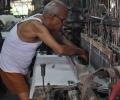
Cottage industries across India have suffered heavily because of the note ban. In the second of a six-part series, Sanjay Jog travels to Bhiwandi to examine how the power loom industry here is coping five weeks on.
Cottage industries across India have suffered heavily because of the note ban. In the second of a six-part series, Sanjay Jog travels to Bhiwandi to examine how the power loom industry here is coping five weeks on.

I-T lens on current account deposits over Rs 12.5 lakh. All the news and more post demonetisation.

The GST has been a great achievement, but it does suffer from weaknesses, says Chief Economic Adviser Arvind Subramanian.

'India's economy is growing faster compared to the developed economies of the world.' 'More importantly, it is growing faster compared to most of the developing economies.' 'The monsoon is not the only thing that drives the rural economy and certainly not the national economy.' 'It is too simplistic to reduce everything to the monsoon.'
